Current condition
Record the carton and packing arrangement as delivered, how the carton is positioned and which products are exposed at each stage. Identify any opening or packing preparation required before a product is available for removal.
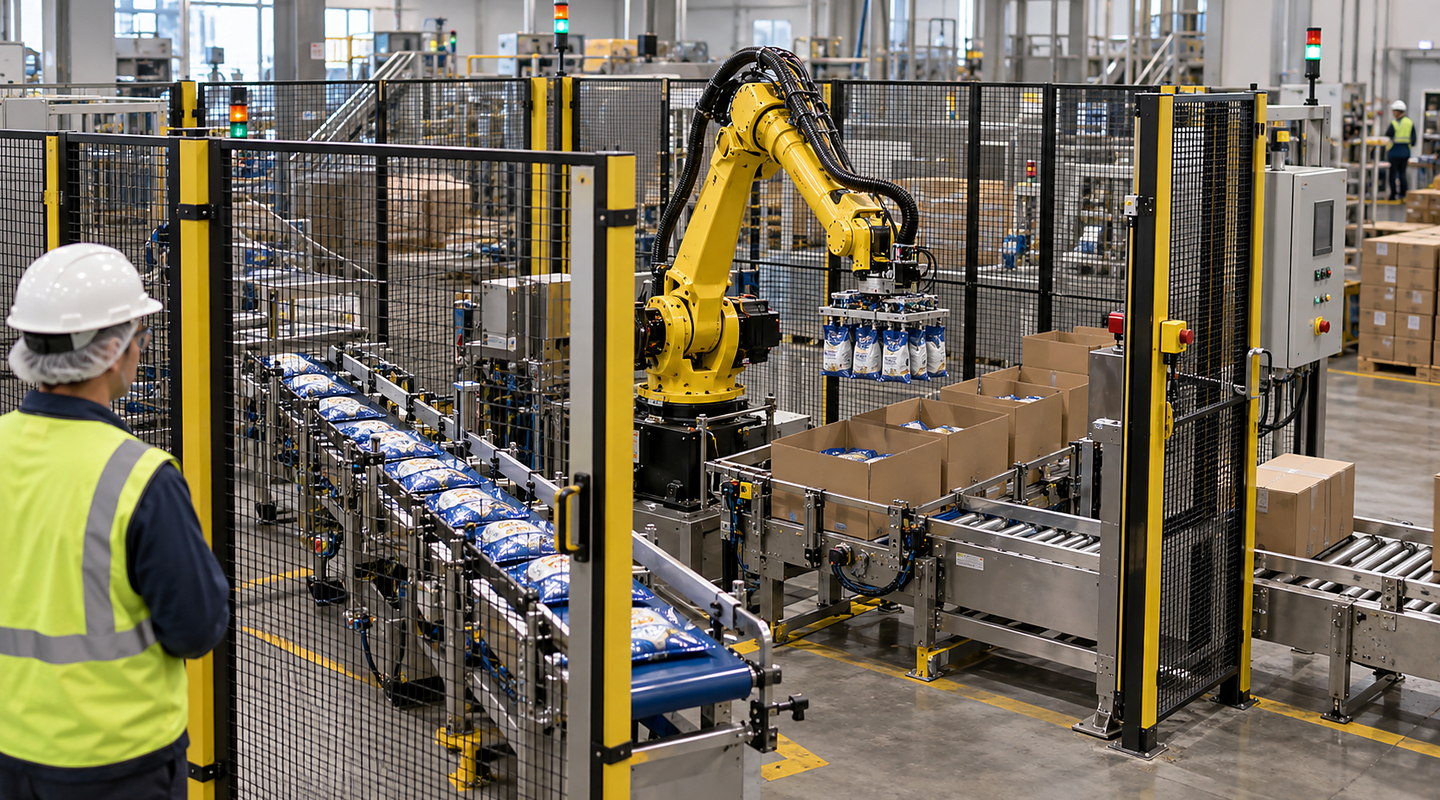
What decisions about arrival pattern and presentation materially change the system concept for robotic carton unloading?
Record how the carton is presented, which products are accessible and the orientation required at the next process. Include carton position, layers, dividers and changes in component position that could affect the intended pick.
Separate preparation of the carton from the removal and placement task. Proposed gripping and sensing methods need assessment against representative examples; the specification checklist keeps confirmed inputs and trial questions distinct.
Plan robotic carton unloading around your parts, process, cycle time, tooling, recovery and acceptance criteria. Discuss the highest-risk feasibility questions with Oxford Industrial Automation. Use this guide to resolve arrival pattern and presentation before it limits the final system.
Discuss your application

Record the carton and packing arrangement as delivered, how the carton is positioned and which products are exposed at each stage. Identify any opening or packing preparation required before a product is available for removal.
Include the normal carton and packing variants, layers and part-position differences seen in production. Note which examples change access or the required presentation to the next process.
For each presentation change, identify the affected step: access, the proposed pick, transfer, destination readiness or placement. Record what must be confirmed before the sequence can continue.
For Arrival Pattern and Presentation: End-of-arm tooling and sensing, describe the current position, required outcome, acceptable limits and known exceptions for part, product and process variation for robotic removal of products from cartons. That lets us compare options against your real production rather than one nominal value.
For Arrival Pattern and Presentation: End-of-arm tooling and sensing, describe the current position, required outcome, acceptable limits and known exceptions for arrival pattern and presentation. That lets us compare options against your real production rather than one nominal value.
For Arrival Pattern and Presentation: End-of-arm tooling and sensing, describe the current position, required outcome, acceptable limits and known exceptions for required cycle and production pattern. That lets us compare options against your real production rather than one nominal value.
Describe proposed contact areas and access constraints as trial inputs. Agree the evidence for the intended product removed, destination ready and placement accepted without prescribing unverified tooling or sensing capability.
For Arrival Pattern and Presentation: End-of-arm tooling and sensing, describe the current position, required outcome, acceptable limits and known exceptions for operator access, recovery and changeover. That lets us compare options against your real production rather than one nominal value.
For Arrival Pattern and Presentation: End-of-arm tooling and sensing, describe the current position, required outcome, acceptable limits and known exceptions for run-off criteria and production evidence. That lets us compare options against your real production rather than one nominal value.